
SignalBoosters.com is an accredited BBB-business and channel partner of the USA leading manufacturers of signal boosting and wireless solutions for residential and commercial customers. Signal Boosters specializes in the design and installation of custom-built cellular signal booster systems and Distributed Antenna Systems (DAS) for industrial, commercial, and residential buildings.
The SignalBoosters.com marketing team was tasked to promote the company’s system design and installation services to commercial and industrial property owners, public safety professionals, and big enterprises that rely on stable RF, wi-fi and cellular signals in their buildings and offices. The purpose of this marketing campaign was to explain the benefits of cellular and wi-fi signal boosting solutions, promote the company’s professional design & installation services, and convert B2B prospects into leads.
- Create customer-centric lead capture promotion
- Provide a clear and prominent call to action
- Make it easy to request more information
- Improve conversion by at least 20%
- Communicate quality and competence
- Keep the focus on the offer benefits
On this project, I worked closely with the director of marketing. My task was to create structure and visuals for the multi-channel installation service promotion campaign.
The entire project team consisted of a director of marketing, a UX/UI designer (myself), a marketing analyst, a copywriter, and a web developer.
The previous campaign performance analysis revealed that the conversion rate and cost per conversion were below expectations. The marketing director and I teamed up to figure out what didn’t work, what needed to be revised, and what improvements can we do for the new campaign to successfully promote cellular signal booster installation services for commercial buildings. I interviewed the B2B Sales team to gain a better understanding of the target audience, their current pain points, and their awareness of solutions and professional services that the Signal Boosters was offering.
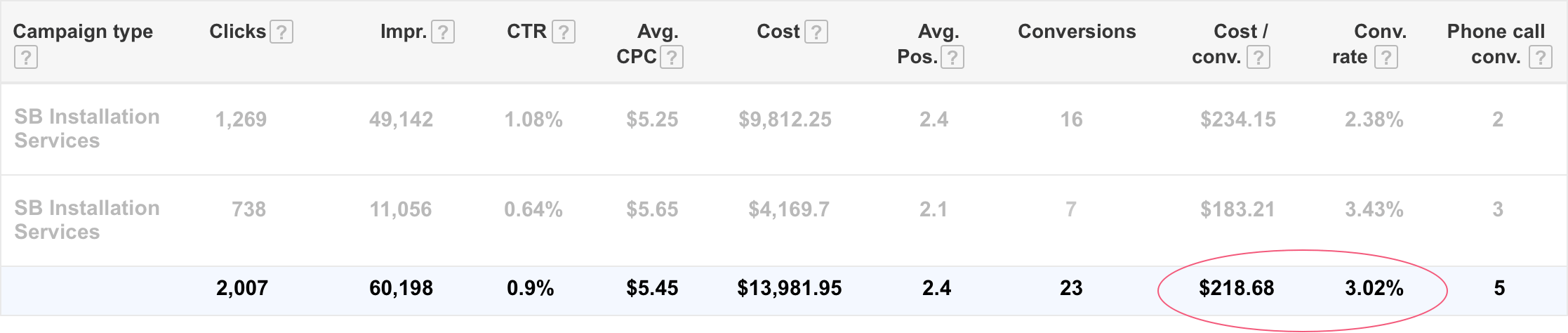
The marketing objective was to serve the company’s (Signal Boosters) business needs by making the installation service offer as desirable as possible to the B2B customers. As a UX designer, my goal was to be a user advocate and make recommendations on how to improve the overall promo campaign experience. Working on this project reminded me of how important it is for any UX designer to fully understand the business objectives while designing for the customer.
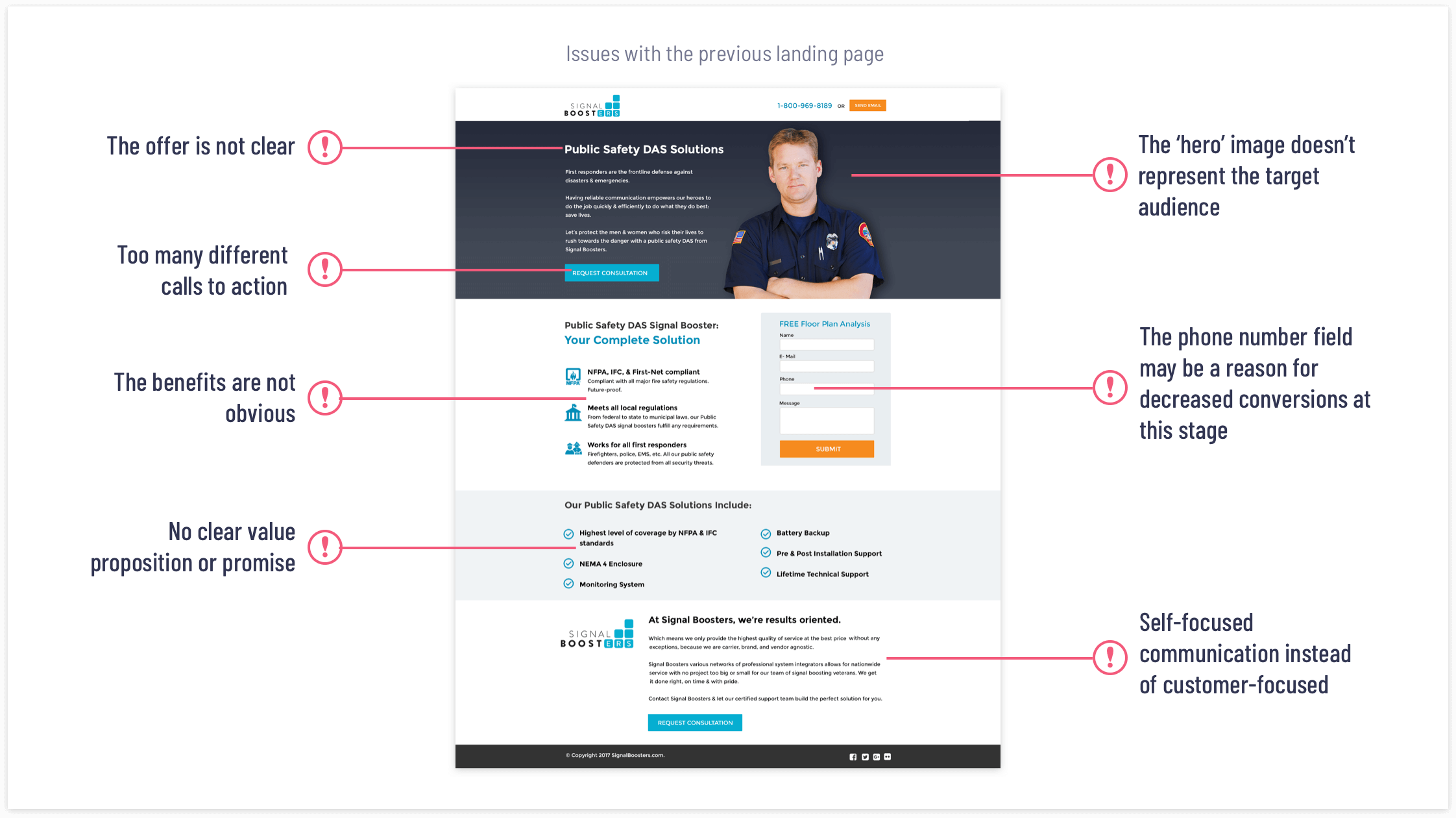
We noticed several issues with the old promo landing page. The page copy didn’t convey a clear value proposition that could entice the new prospects. The landing page featured several different and competing calls-to-action: Send Email, Request Consultation, and Submit (contact form). There was no obvious primary CTA, which could have contributed to users’ indecision. The visuals on the page didn’t quite represent the target audience.
I started with researching best practices for the landing pages and reviewed several good examples. The next step was to see how I could solve the issues we identified as contributing factors to the low conversion rates. Instead of one landing page that is trying to cover 'everything' and has multiple vague offers, I proposed to create two separate but more focused landing pages: 1) general introduction for the signal boosting system design and installation service, and 2) a free initial consultation request. I created several wireframes that outlined the main content blocks and basic layouts.
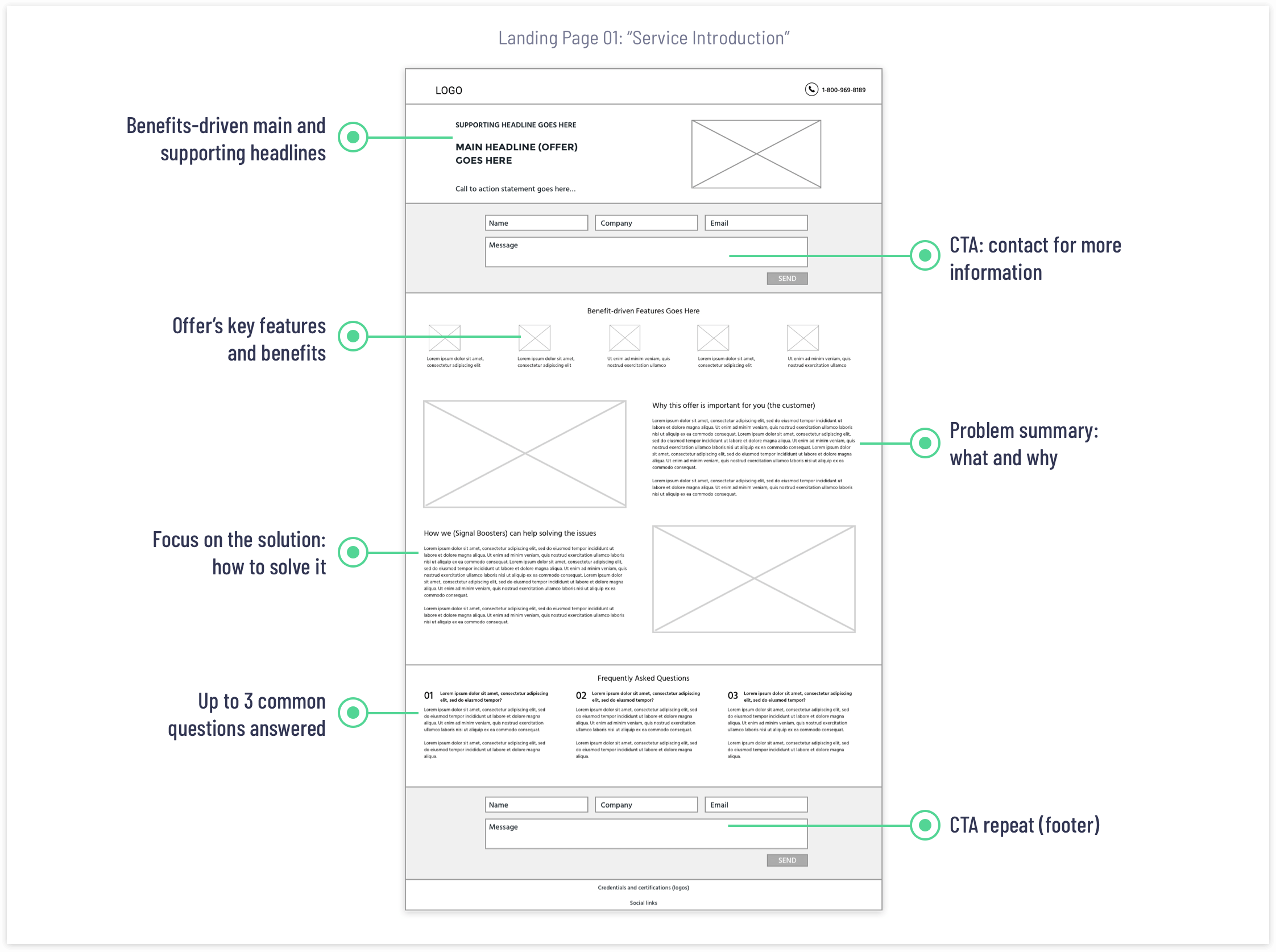
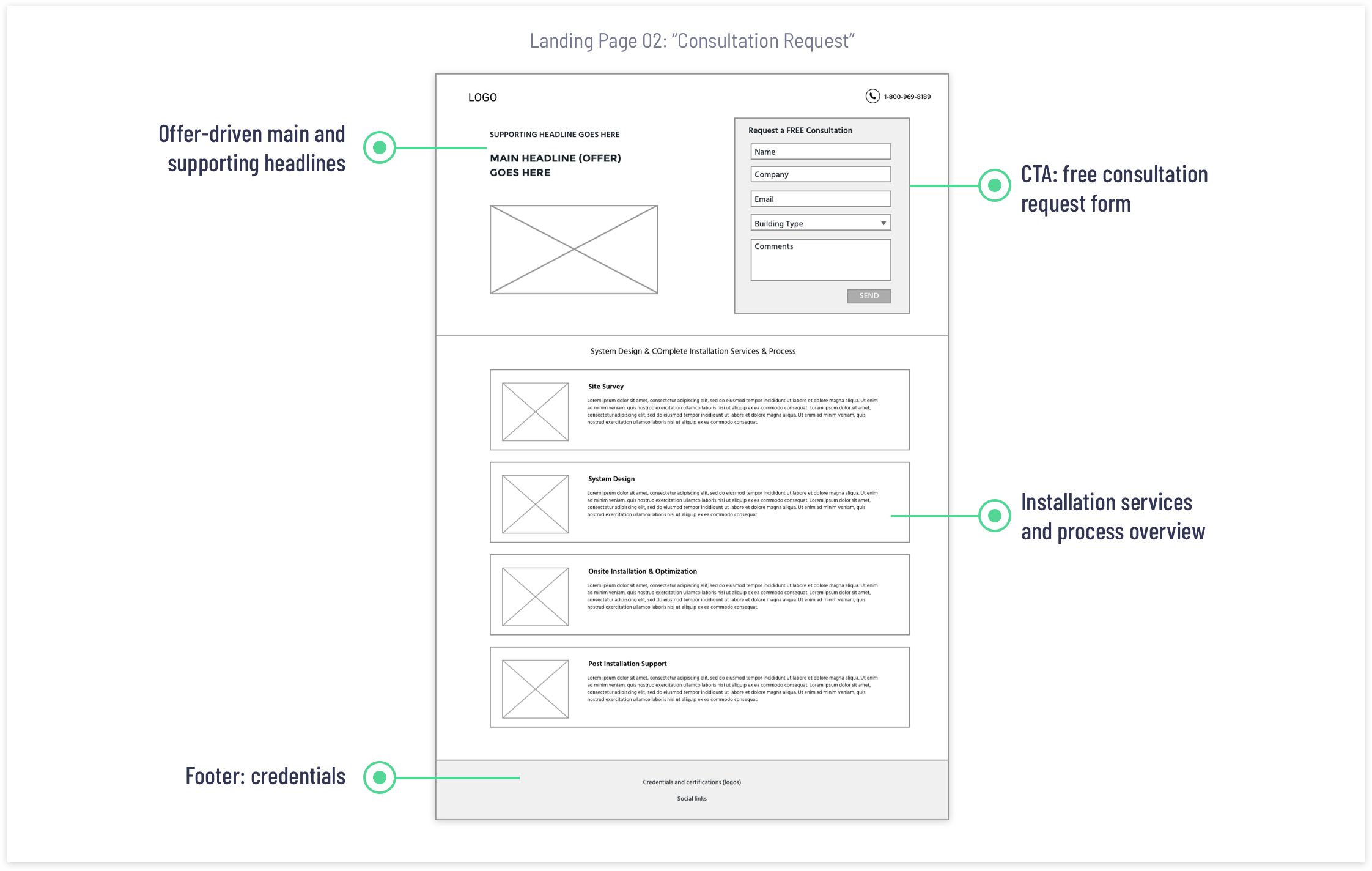
When the copy was ready, I made hi-fidelity mockups for the targeted landing pages. My aim was to create a clean, corporate look and functional, straight-forward design. I kept the focus on features and visuals that communicate value to the commercial building owners.
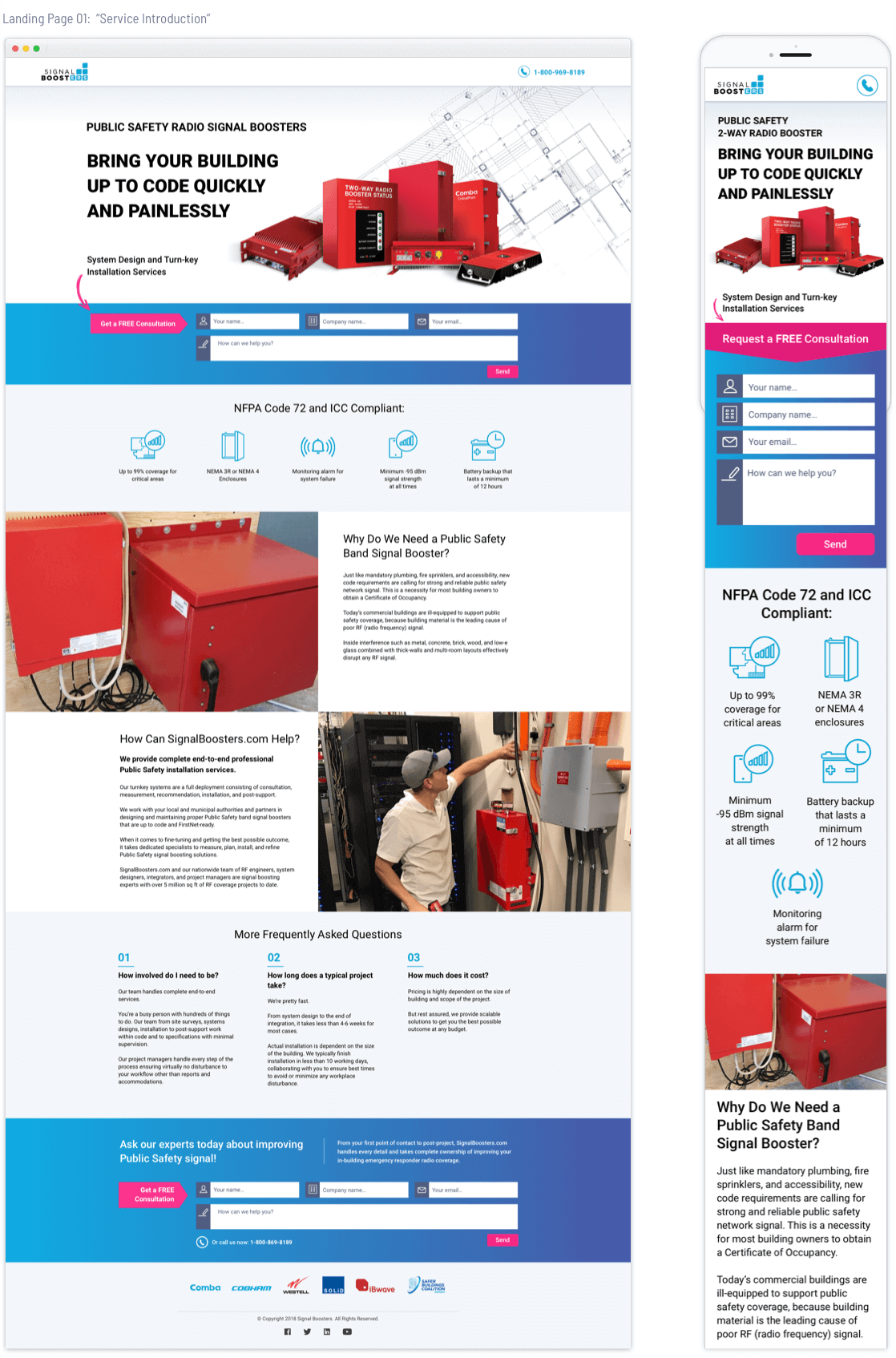
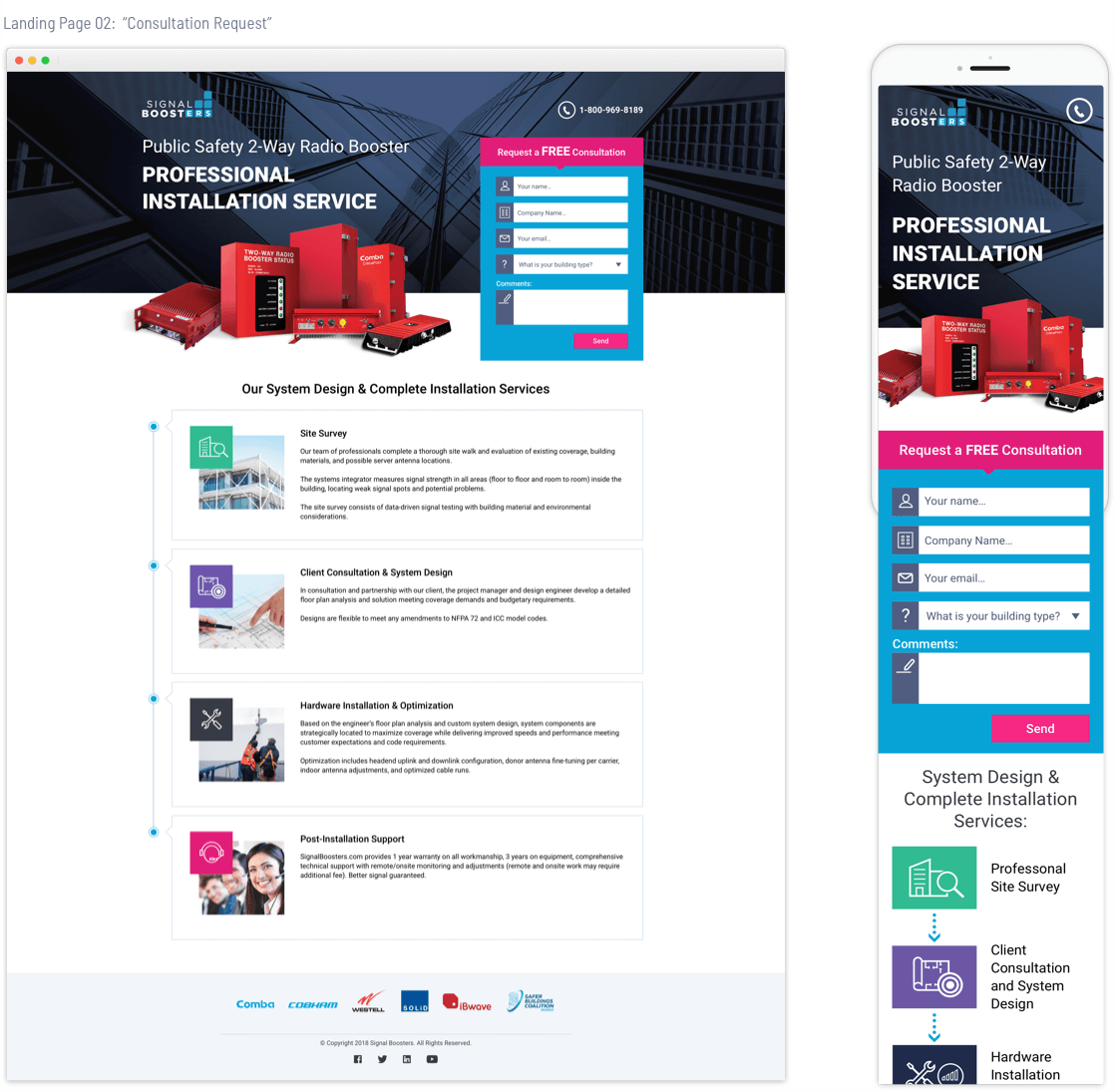
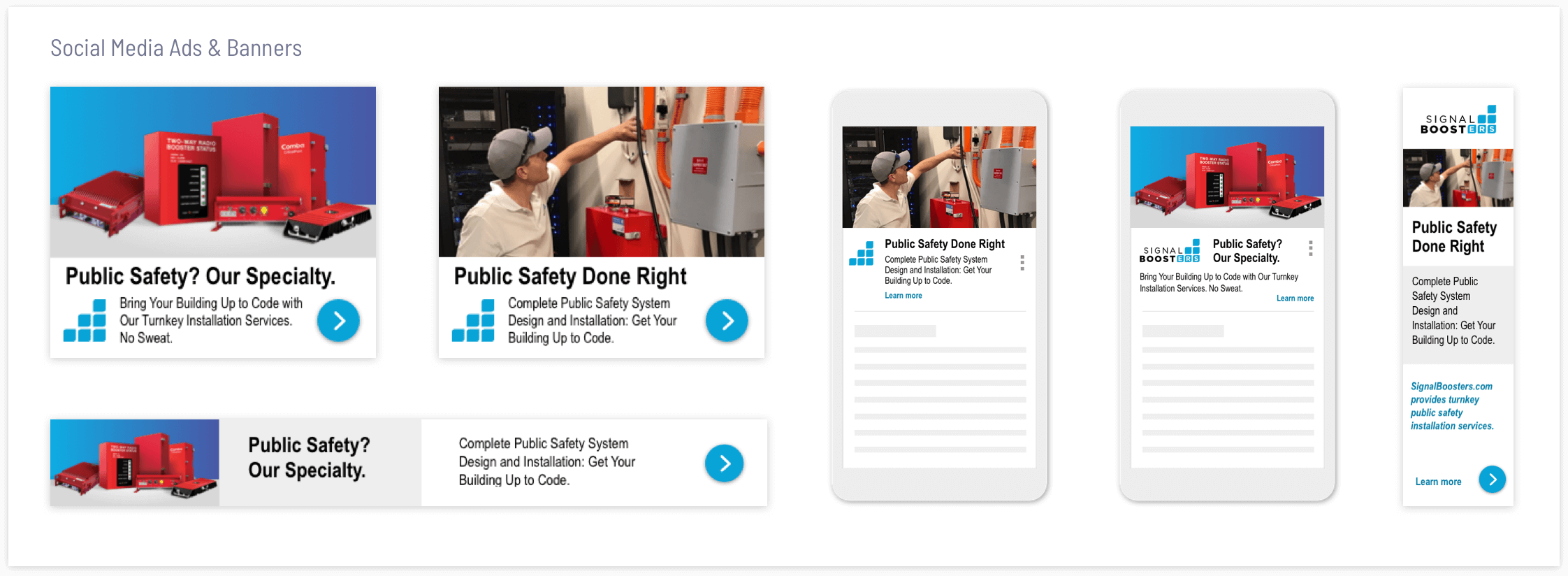
When the landing pages were ready to launch, I continued working on additional creatives for both online and offline digital media channels to help to promote the installation services and build awareness, credibility, and visibility of the brand. The creatives included social media ads and service sales collateral.
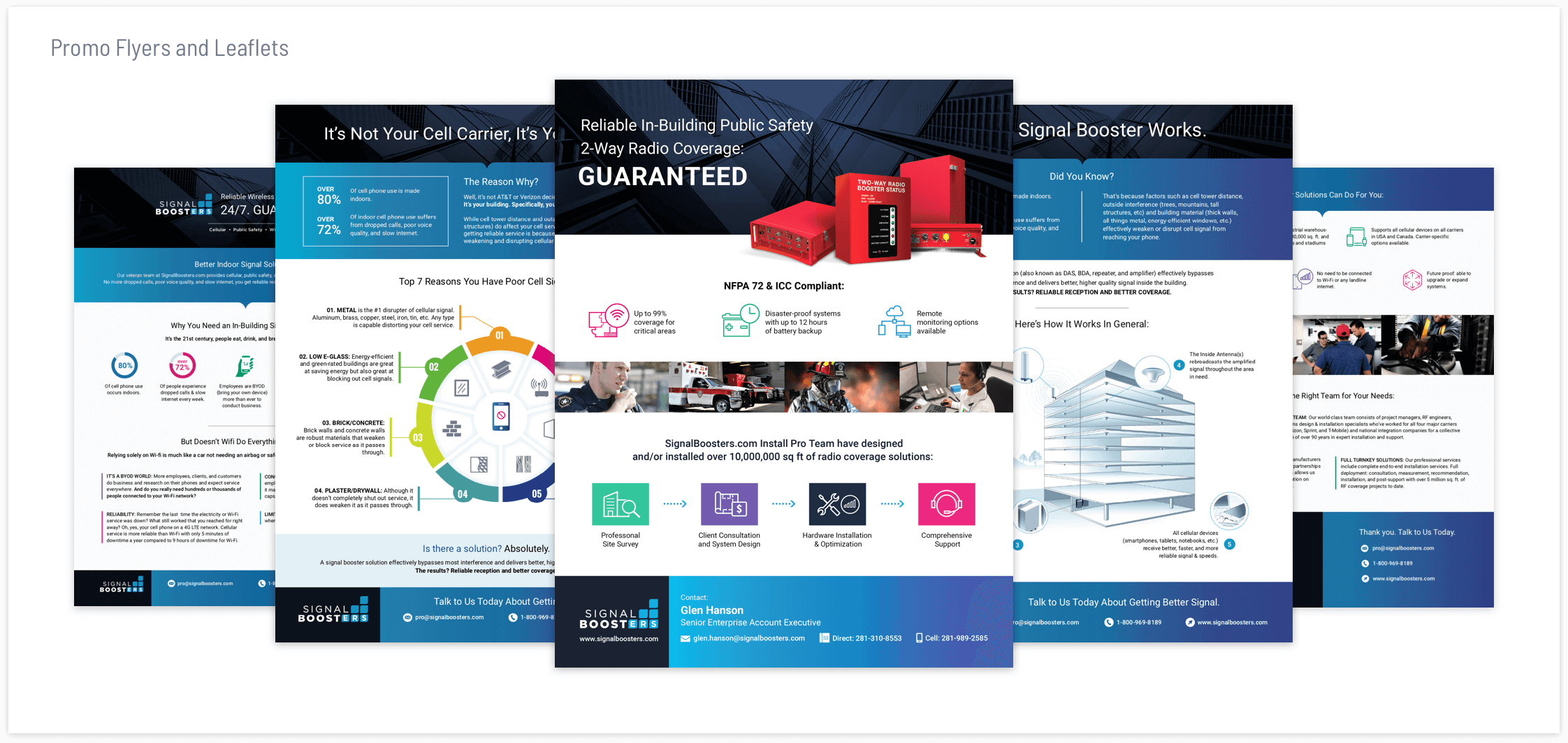
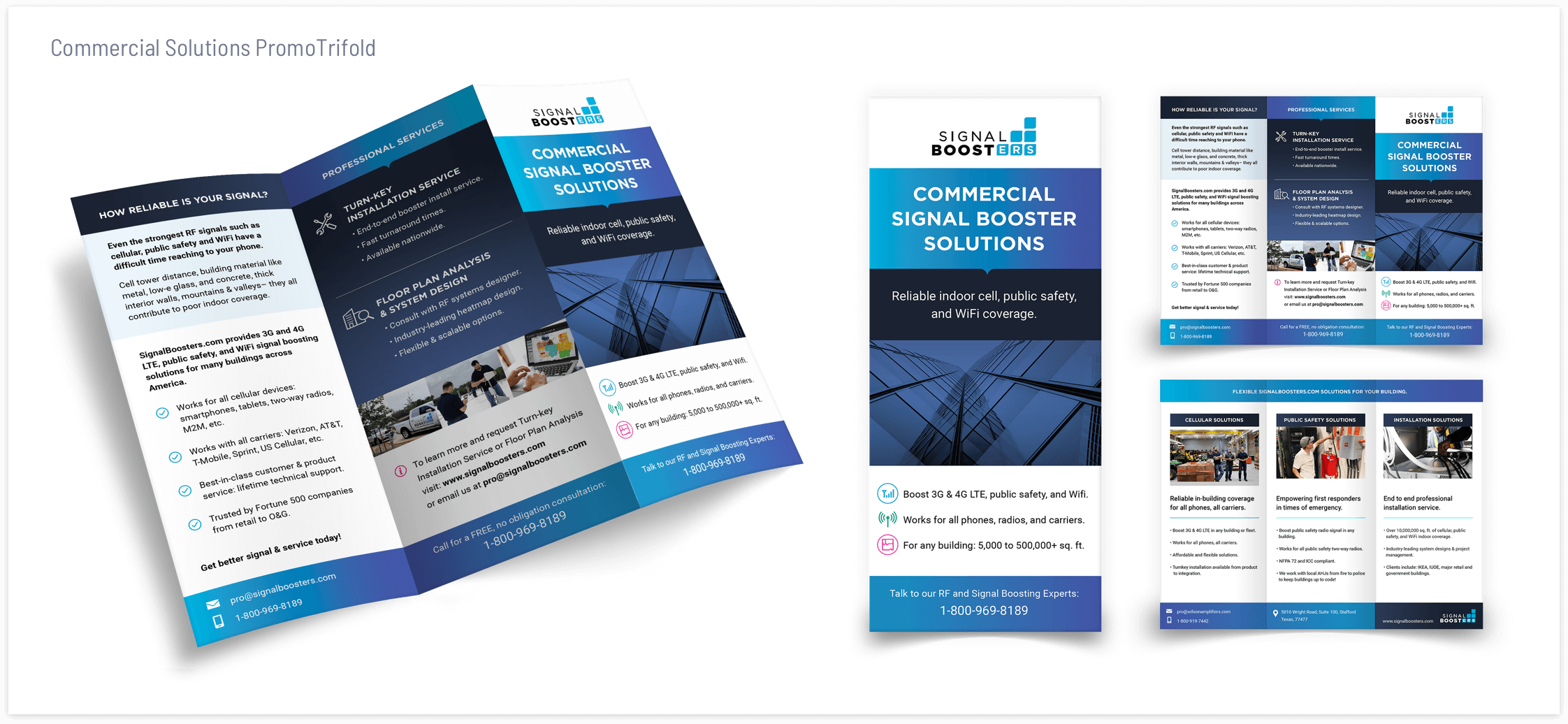
I designed several sell sheets or sales slicks - one-page informational documents that showcase how the company was solving a weak cellular signal problem inside the commercial spaces and the importance of this service for public safety. The sheets featured a brief promotion of the SignalBoosters.com services and solutions. The main purpose of the sale collateral was a leave-behind material after an initial discovery call, email, or in-person meeting. These sheets were designed to be emailed, viewed online, or shared as print-outs.

The new landing pages performed significantly better than the old one. The marketing director was pleased to announce that our redesign efforts paid off. We managed to cut around 70% from Cost Per Conversion and decrease it from $216.68 in the old landing page down to $69.35. The company won several big installation projects for companies such as Ikea, Walmart, and Kaiser Permanente (San Jose, CA).
For me personally, it was an interesting experience to work as a UX/UI designer for a marketing campaign project. The UX and marketing teams had a common goal: we both aimed to create an engaging experience and the right synergy of the business goals and customer needs. While marketing usually focuses on research and analyzing data and numbers, my goal was to distill the insights from the marketing research and use empathy and customer-centric approach to craft the experience of the campaign.
The bottom line: to deliver a great user experience for any project it is vital to connect the business with prospects by clearly understanding the business objectives and empathizing with the audience.